
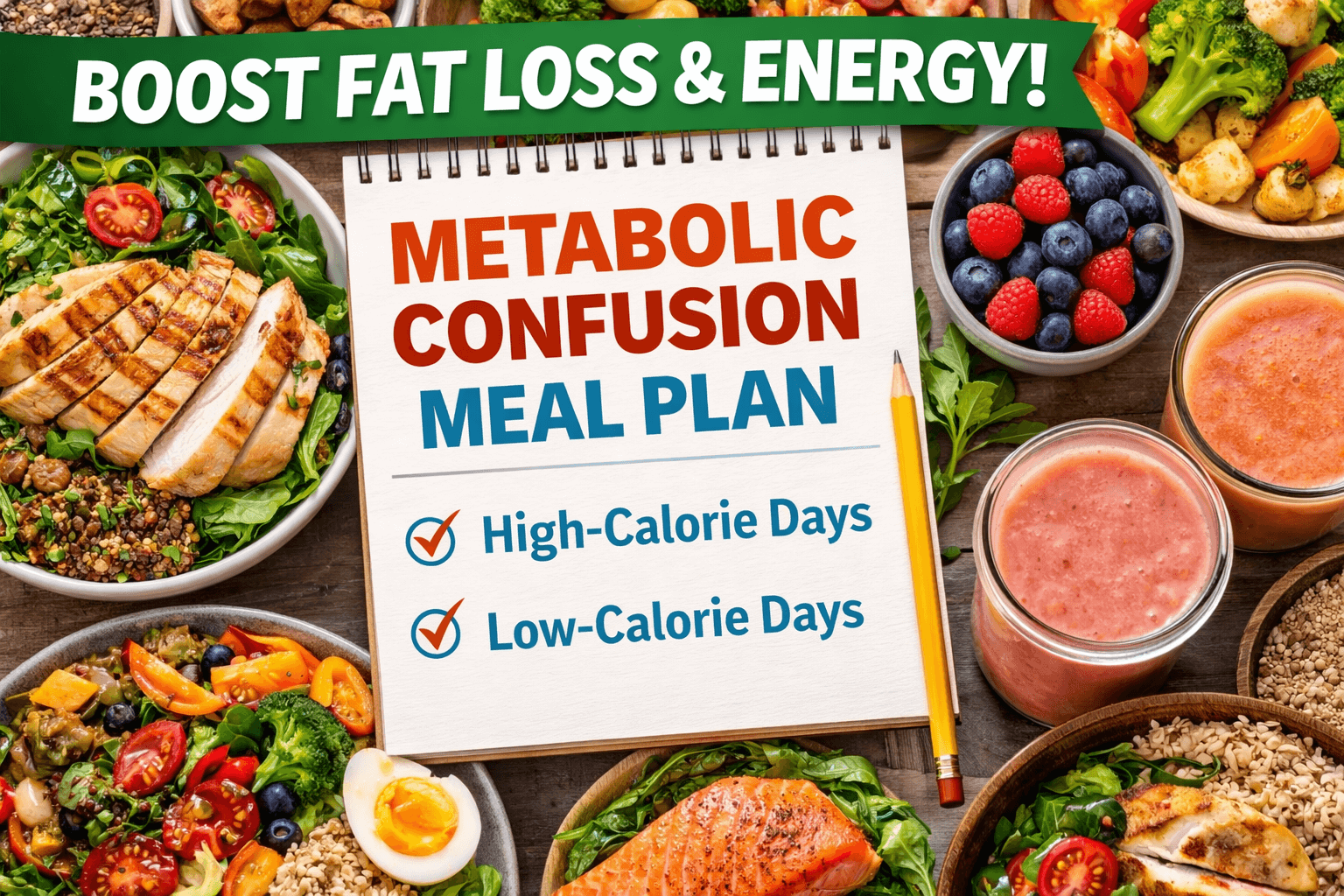
If you’ve ever hit a frustrating weight loss plateau despite dieting, you’re not alone. Many traditional diets fail because the body adapts to a fixed routine — leading to slower metabolism and stalled fat loss. That’s where the metabolic confusion meal plan comes in.
This innovative eating approach alternates between high- and low-calorie days to “confuse” your metabolism and keep your body burning calories efficiently. It’s not about restriction — it’s about smart variation.
By cycling calories and nutrients, your metabolism stays active, your hormones stay balanced, and you’re less likely to experience diet burnout.
What Is the Metabolic Confusion Meal Plan?
The Science Behind Metabolic Confusion
The concept of metabolic confusion (also known as calorie cycling) is built on metabolic adaptation — the process by which your body adjusts to your caloric intake. When you eat fewer calories for too long, your metabolism slows down to conserve energy.
By alternating between high- and low-calorie days, your body never fully adapts, maintaining a higher metabolic rate and promoting continuous fat burning.
How It Differs from Traditional Dieting
Unlike rigid calorie restriction, metabolic confusion allows flexibility. You can enjoy higher-calorie meals without guilt while still achieving fat loss over time. This approach also helps maintain muscle mass — something many restrictive diets compromise.
How the Metabolic Confusion Meal Plan Works
Alternating Calorie Intake Explained
Most plans alternate between:
- High-Calorie Days (Refuel Days): You eat slightly above your maintenance calories to support metabolism and muscle recovery.
- Low-Calorie Days (Fat-Burning Days): You eat below your maintenance calories to create a calorie deficit.
This cyclical pattern promotes fat burning without sending your body into “starvation mode.”
The Role of Macronutrient Cycling
Beyond calories, metabolic confusion also involves adjusting macronutrients (carbs, fats, and protein).
- High-Calorie Days: More carbs and proteins for energy and muscle support.
- Low-Calorie Days: More fats and fiber to sustain fullness and stabilize blood sugar.
Why “Confusing” Your Metabolism Can Work
Your metabolism is dynamic. By keeping it guessing, you avoid adaptive thermogenesis — the body’s tendency to lower energy expenditure during calorie restriction. In simple terms, it keeps your “metabolic fire” burning.
Benefits of the Metabolic Confusion Meal Plan
1. Boosts Metabolic Flexibility
Your body becomes better at switching between burning carbs and fats for fuel — a key factor in long-term fat loss.
2. Prevents Weight Loss Plateaus
By varying intake, you stop your metabolism from adapting to a single calorie level, helping sustain steady progress.
3. Encourages Long-Term Sustainability
Unlike restrictive diets, you don’t feel deprived. You can enjoy variety and freedom, making it easier to stick with the plan.
4. Reduces Cravings and Diet Fatigue
High-calorie days help control cravings and reduce mental fatigue — one of the biggest reasons people quit dieting.
Possible Drawbacks and Considerations
Potential Challenges for Beginners
Switching calorie levels can be confusing at first. It requires planning and awareness to balance meals correctly.
Common Mistakes to Avoid
- Overeating on high-calorie days
- Not eating enough protein on low-calorie days
- Skipping hydration or fiber-rich foods
Building Your Metabolic Confusion Meal Plan
Step 1: Identify Your Caloric Baseline
Find your maintenance calories (using tools like the TDEE calculator). This gives you a baseline to plan your high- and low-calorie days.
Step 2: Create High-Calorie and Low-Calorie Days
- High-Calorie Days: Eat 10–20% above maintenance.
- Low-Calorie Days: Eat 20–25% below maintenance.
Step 3: Focus on Macronutrient Quality
Prioritize whole, nutrient-dense foods — lean proteins, complex carbs, and healthy fats. Avoid processed snacks or sugary beverages.
Sample 7-Day Metabolic Confusion Meal Plan
| Day | Calories | Focus | Example Meals |
|---|---|---|---|
| Day 1 (High) | 2200 | High protein, moderate carbs | Oatmeal + eggs, chicken stir-fry, salmon with quinoa |
| Day 2 (High) | 2200 | Energy restoration | Yogurt parfait, turkey wrap, beef tacos |
| Day 3 (Low) | 1500 | Fat-burning focus | Omelet with veggies, tuna salad, grilled chicken + greens |
| Day 4 (Low) | 1500 | Low-carb emphasis | Protein smoothie, baked cod, roasted veggies |
| Day 5 (High) | 2300 | Refeed day | Avocado toast, rice bowl, pasta with shrimp |
| Day 6 (Moderate) | 1900 | Balanced macros | Greek yogurt, veggie omelet, lentil soup |
| Day 7 (Rest) | 1800 | Maintenance day | Smoothie, quinoa salad, baked chicken |
Best Foods to Include in a Metabolic Confusion Diet
High-Calorie Day Foods
- Sweet potatoes, brown rice, and oats
- Lean meats and fish
- Whole-grain bread
- Greek yogurt and fruit
Low-Calorie Day Foods
- Leafy greens and cruciferous vegetables
- Eggs and tofu
- Healthy fats (olive oil, avocado, nuts)
- Protein shakes and legumes
Nutrient Timing and Hydration Tips
Drink water consistently, aim for 2–3 liters daily, and consume most carbs earlier in the day to optimize metabolism.
Who Should Try the Metabolic Confusion Meal Plan?
Ideal Candidates
- Individuals who hit a weight loss plateau
- People looking for flexible, sustainable fat loss
- Those who prefer variety and dislike strict diets
Who Should Avoid It
- Anyone with medical conditions requiring consistent calorie intake
- People recovering from eating disorders
- Athletes needing steady fueling for training
Tips for Success with Metabolic Confusion
Combine with Resistance Training
Muscle-building workouts help maximize metabolic rate and improve results.
Track Your Progress Intelligently
Monitor energy levels, hunger, and mood — not just the scale. Progress photos and measurements tell the real story.
Maintain Consistency, Not Perfection
It’s okay to have imperfect days. The key is long-term consistency and mindful eating.
Metabolic Confusion vs. Intermittent Fasting
Key Similarities
Both aim to improve metabolic flexibility and promote fat loss through timing and energy balance.
Important Differences
- Intermittent fasting focuses on when you eat.
- Metabolic confusion focuses on how much you eat and how often you change it.
Which Is Better for You?
If you prefer meal flexibility, metabolic confusion may be better. For those who prefer fewer meals, intermittent fasting could work.
FAQs About Metabolic Confusion Meal Plan
1. How long should I follow a metabolic confusion plan?
It depends on your goals, but most people follow it for 8–12 weeks for noticeable results.
2. Can I build muscle with this meal plan?
Yes — especially on high-calorie days combined with strength training.
3. Is metabolic confusion safe for teenagers?
It’s best for adults, but teens can adopt its balanced meal structure under guidance.
4. Do I have to count calories every day?
Not necessarily. Once you get familiar with portion sizes, you can estimate.
5. Can I still lose weight if I don’t exercise?
Yes, but adding physical activity enhances results significantly.
6. What’s the best way to track progress?
Track measurements, photos, and how your clothes fit rather than relying solely on weight.
Conclusion: Can Metabolic Confusion Really Transform Your Metabolism?
The metabolic confusion meal plan offers a flexible and scientifically grounded way to reboot your metabolism and achieve lasting fat loss. By alternating calorie and nutrient intake, you prevent metabolic slowdown, enjoy food freedom, and promote consistent energy levels.
It’s not a magic trick — it’s a smarter, more sustainable way to eat that respects how your metabolism truly works.
If your current diet feels stale or ineffective, this might be the strategy that finally gets your body (and energy) moving again.
External Resource:
Learn more about metabolic health and nutrition from Harvard Health Publishing.