
You’re tracking your steps.
You’re closing your Apple Watch rings.
You’re even choosing “healthy” snacks at night.
And yet… your sleep is still broken, your energy crashes by mid-morning, and your glucose numbers (if you’ve ever checked them) don’t make sense.
Here’s the uncomfortable truth: most people over 35 don’t realize:
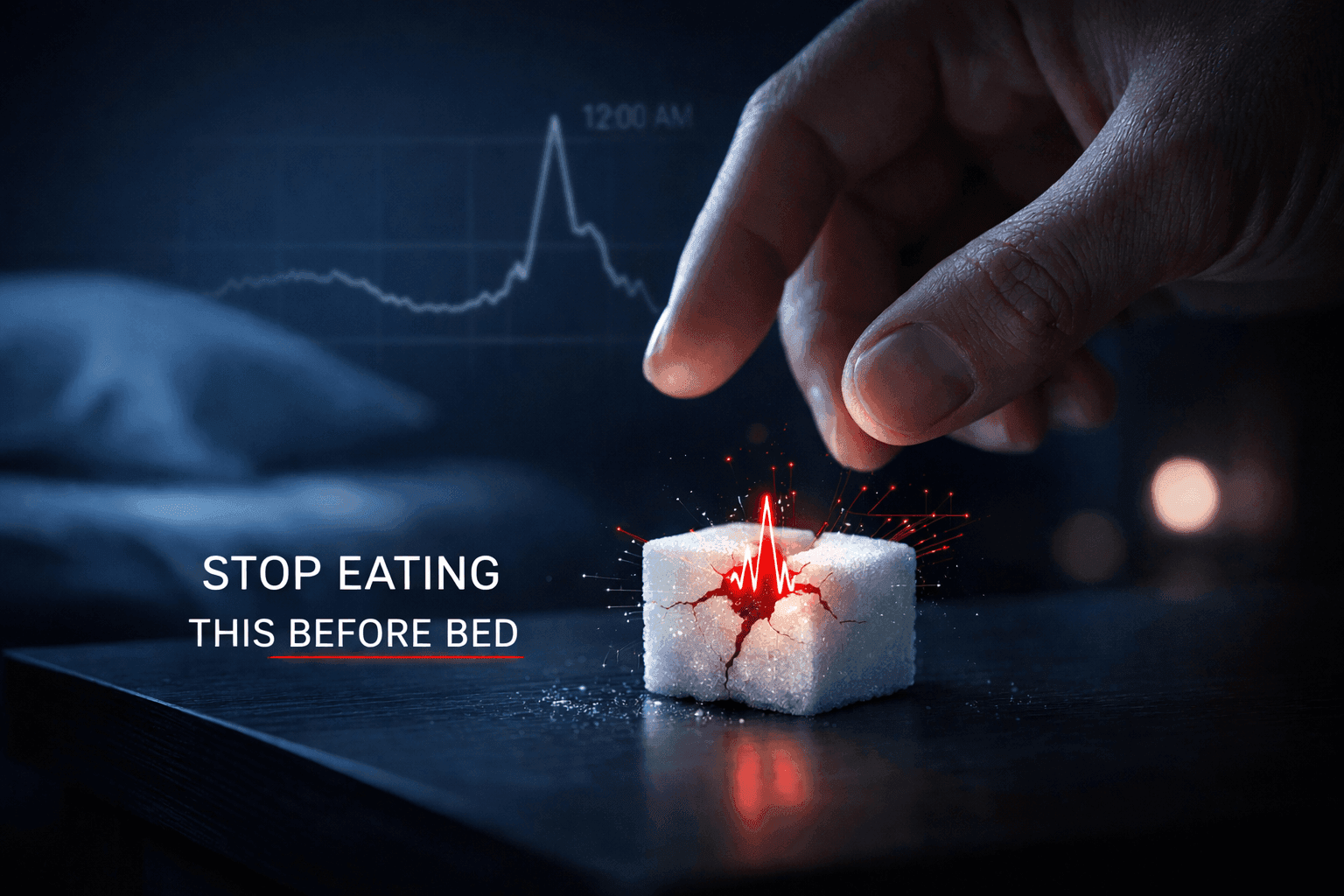
One common ingredient eaten before bed can silently sabotage your sleep, spike your blood sugar, and push your metabolism toward insulin resistance—without obvious symptoms.
That ingredient isn’t caffeine.
It’s not fat.
It’s hidden added sugars, especially high-fructose corn syrup.
The Midnight Spike: What Your Apple Watch Isn’t Telling You
Wearables track sleep stages, heart rate, and HRV.
What they don’t show is what’s happening to your blood glucose at 2:17 a.m.
This is where Continuous Glucose Monitors (CGMs) are changing the conversation.
People using CGMs for Type 2 diabetes management and metabolic health coaching are discovering something shocking:
Foods eaten “safely” at night can cause delayed glucose spikes hours later, right when your body should be in deep sleep.
High-fructose corn syrup and added sugars digest quickly, flood the bloodstream, and trigger insulin release. When glucose crashes afterward, your body responds with cortisol and adrenaline—stress hormones that pull you out of restorative sleep.
You may never wake up fully.
But your nervous system does.
Why Added Sugar Before Bed Is Metabolically Dangerous
Late-night sugar creates a glucose spike-and-crash cycle that mimics early insulin resistance.
Here’s what happens step by step:
- Rapid glucose spike from liquid sugars or processed carbs
- Insulin surge to clear glucose from the blood
- Blood sugar drop during early sleep
- Cortisol release to stabilize glucose
- Fragmented sleep, higher inflammation, and next-day cravings
Over time, this pattern contributes to:
- Reduced insulin sensitivity
- Higher fasting glucose
- Increased abdominal fat storage
- Chronic low-grade inflammation
This is why sleep specialists and diabetes researchers increasingly overlap with sleep science and personalized nutrition therapy.
The Hidden Sugar “Avoid List” (Especially at Night)
These foods are common evening snacks—and metabolic landmines:
- Flavored yogurt
- Granola bars labeled “natural”
- Bottled smoothies or juices
- Cereal (even whole-grain)
- Protein bars with syrups
- Low-fat desserts
- Sauces and condiments with HFCS
If the label includes high-fructose corn syrup, glucose syrup, rice syrup, or maltodextrin, your CGM would almost certainly show a spike.
The CGM Effect: Seeing What You Can’t Feel
People reading continuous glucose monitor reviews often expect dramatic daytime insights.
What surprises them most?
Night-time data.
CGMs reveal:
- “Silent” glucose spikes during sleep
- How stress hormones raise glucose without food
- Which bedtime snacks actually stabilize blood sugar
Paired with modern glucose tracking apps, CGMs are becoming tools not just for diabetes—but for preventative metabolic health.
Poor Sleep → Cortisol → Metabolic Syndrome
When sleep quality drops, cortisol rises.
When cortisol rises, insulin sensitivity drops.
This is how nightly sugar becomes a long-term problem.
Chronic sleep disruption is linked to:
- Higher risk of Type 2 diabetes
- Weight gain resistant to dieting
- Elevated triglycerides
- Increased cardiovascular risk
This is why many clinicians now combine wearable health tech, CGMs, and medical-grade sleep aids as part of comprehensive metabolic care—not just for patients, but for high-performing professionals.
The 3-Day Bedtime Reset (Simple, Powerful, Proven)
You don’t need a detox.
You need stability.
Days 1–3: Cut All Added Sugars After 7 PM
Then replace them strategically.
Swap This for That
| Instead of… | Choose… |
|---|---|
| Cereal | Greek yogurt + chia seeds |
| Cookies | Cottage cheese + cinnamon |
| Fruit juice | Whole berries |
| Protein bar | Boiled eggs |
| Ice cream | Casein protein pudding |
Why this works:
- Protein slows glucose absorption
- Fiber blunts insulin spikes
- Stable glucose = deeper sleep cycles
Many people see measurable improvements in 3 nights, especially those already using insulin sensitivity supplements or metabolic health programs.
Best Foods for Night-Time Insulin Sensitivity
- Eggs
- Plain Greek yogurt
- Nuts (small portions)
- Seeds (chia, flax)
- Bone broth
- Tofu or tempeh
These foods support chronic inflammation relief while keeping glucose stable overnight.
FAQ
Can a CGM help me sleep better?
Yes. CGMs show how your food, stress, and sleep interact. Many users adjust evening meals after seeing night-time spikes, leading to deeper sleep and better morning energy.
What are the best foods for insulin sensitivity?
Protein-rich, fiber-dense foods with minimal added sugars. Consistency matters more than perfection, especially at night.
How long does it take to reverse a glucose spike?
Acute spikes normalize within hours, but improving insulin sensitivity typically takes days to weeks of stable sleep, reduced sugar intake, and stress control.
The Bottom Line
You don’t need to eat less.
You need to eat smarter at night.
High-fructose corn syrup and hidden added sugars before bed quietly damage sleep, elevate cortisol, and accelerate metabolic dysfunction—often years before diabetes appears.
If you care about:
- Type 2 diabetes management
- Wearable health tech insights
- Long-term metabolic health
Start here.
Stop eating this one ingredient before bed—and let your metabolism recover while you sleep.